
Comparing Skin Botox and Conventional Botox Trends in Korea

Korea is known for its advanced beauty industry and innovative skincare treatments. Among the many cosmetic procedures gaining popularity, Skin Botox and Conventional Botox stand out as two trending options. Both treatments use botulinum toxin but serve different purposes and offer distinct results. Understanding their differences can help you decide which option suits your skincare goals best.
What Is Conventional Botox?
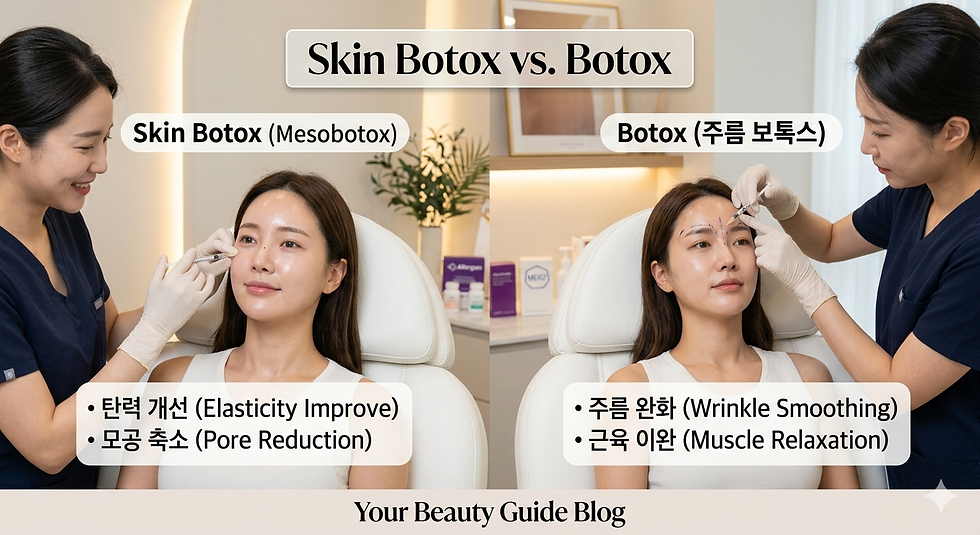
Conventional Botox is a well-known cosmetic procedure primarily used to reduce wrinkles and fine lines. It works by temporarily paralyzing muscles responsible for facial expressions, such as frowning or squinting. This muscle relaxation smooths out dynamic wrinkles, especially around the forehead, eyes (crow’s feet), and between the eyebrows.
Key Features of Conventional Botox
Targets deeper facial muscles
Effective for reducing dynamic wrinkles
Results last about 3 to 6 months
Commonly used for anti-aging purposes
People often choose conventional Botox to achieve a more youthful, wrinkle-free appearance. It is especially popular among those who want to soften expression lines without undergoing surgery.
What Is Skin Botox?
Skin Botox, also known as micro-Botox or mesobotox, is a newer trend in Korea. Instead of injecting Botox into muscles, it is administered into the superficial layers of the skin. This approach focuses on improving skin texture, reducing pore size, and controlling oil production rather than paralyzing muscles.
Key Features of Skin Botox
Injected into the skin’s surface, not muscles
Reduces pore size and controls sebum (oil)
Improves skin elasticity and hydration
Helps with fine lines but not deep wrinkles
Results last around 2 to 4 months
Skin Botox is popular among younger people or those who want subtle improvements in skin quality without the frozen look sometimes associated with conventional Botox.
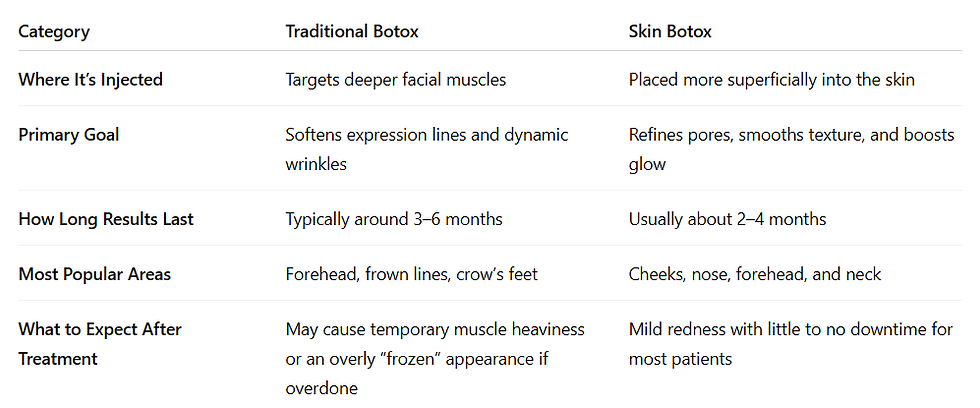
Differences Between Skin Botox and Conventional Botox
Why Are Both Treatments Trending in Korea?
Korea’s beauty culture values natural-looking results and healthy skin. Both Skin Botox and Conventional Botox fit these ideals but appeal to different needs.
Conventional Botox offers a proven way to fight aging signs, making it a staple for those seeking wrinkle reduction.
Skin Botox aligns with the Korean focus on flawless skin texture and pore control, especially for oily or combination skin types.
Clinics in Korea often combine these treatments to provide comprehensive facial rejuvenation. For example, a patient might receive conventional Botox on the forehead to smooth wrinkles and Skin Botox on the cheeks to tighten pores and improve skin glow.
What to Expect During Treatment
Both procedures are minimally invasive and performed in clinics by trained professionals. The process usually takes 15 to 30 minutes.
Conventional Botox injections may cause slight discomfort and require precise targeting of muscles.
Skin Botox involves multiple tiny injections over a wider area of the skin surface.
Downtime is minimal for both, with most people returning to daily activities immediately. Some mild redness or swelling can occur but typically resolves within a day.
Choosing Between Skin Botox and Conventional Botox
Your choice depends on your skin concerns and goals:
Choose Conventional Botox if you want to reduce deep wrinkles caused by muscle movement.
Choose Skin Botox if you want to improve skin texture, reduce pore size, and control oil without affecting facial expressions.
Consulting with a dermatologist or cosmetic specialist is essential. They can assess your skin and recommend the best treatment or combination for your needs.
Safety and Considerations
Both treatments use botulinum toxin, which is safe when administered by qualified professionals. Side effects are rare but can include bruising, mild swelling, or temporary muscle weakness.
Avoid treatments if you are pregnant, breastfeeding, or have certain neuromuscular conditions. Always disclose your medical history to your provider.

